


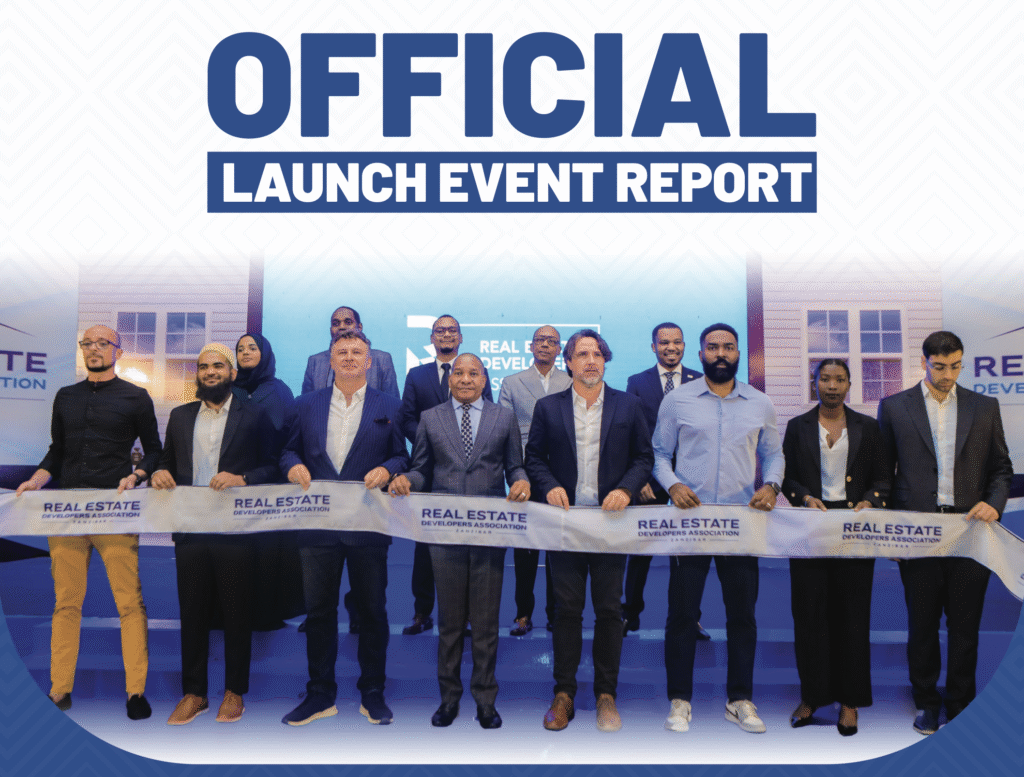
INTRODUCTION
On 3rd April 2025, the Zanzibar Real Estate Developers Association (REDA) was officially launched at the Golden Tulip Airport Hotel, marking a significant step forward for the island’s real estate and investment landscape. REDA is a private business organization that brings together leading real estate developers and industry-related professionals to promote their collective interests, foster collaboration, and advocate for an enabling and transparent investment environment in Zanzibar. Established to unite key players in the real estate development sector, REDA serves as a platform for sharing best practices, driving innovation, and addressing common challenges. The association aims to be a competent and influential partner in dialogue with the Government of Zanzibar, contributing to the creation of a more investor-friendly regulatory framework.
Held under the theme “Unlocking Zanzibar’s Real Estate Potential: Investment, Innovation and Sustainable Development,” the launch event emphasized the vital role of real estate in driving inclusive economic growth. Key moments included welcome remarks from Mr. Masoud Salim, Company Secretary and Legal Advisor of REDA, and Mr. Marcin Filipczyk, Chairman of REDA. The keynote address was delivered by Hon. Sharif A. Sharif, Minister of State in the President’s Office for Labor, Economy, and Investment, reaffirming the government’s support for private sector-led investment.
The event also featured expert panel discussions on two central themes: Investment Opportunities in Zanzibar’s Real Estate Market and Regulatory Framework and Compliance in Real Estate Development, as well as plenary discussion sessions that encouraged dialogue among stakeholders. Attended by developers, government officials, investors, and other key players, the event laid a solid foundation for impactful partnerships and a vibrant, sustainable real estate sector in Zanzibar. The launch was supported by key partners across Zanzibar’s real estate, construction, communications, and hospitality sectors, including PADDCO, Furaha Investment, Johari Developers, CPS Africa, Utulivu, Infinity Developments, ComNet, Said Attorney and Associates, MB Zanzibar, Rahisi Solutions, and GF Trucks & Equipment.
WELCOME REMARKS
Masoud Salim Mohamed, Secretary and Legal Advisor of the Zanzibar Real Estate Developers Association (REDA), delivered the welcome remarks. In his address, he emphasized that the gathering began a meaningful dialogue between private sector stakeholders and the government. This dialogue would spark constructive debate and lead to improvements that serve both investors and Zanzibar’s broader economic interests.
He noted that the real estate sector in Zanzibar is expanding rapidly, and the establishment of REDA comes at a crucial time. The association, he explained, will provide a unified platform for real estate investors, developers, and industry professionals to come together, speak with a collective voice, and advocate for shared priorities.
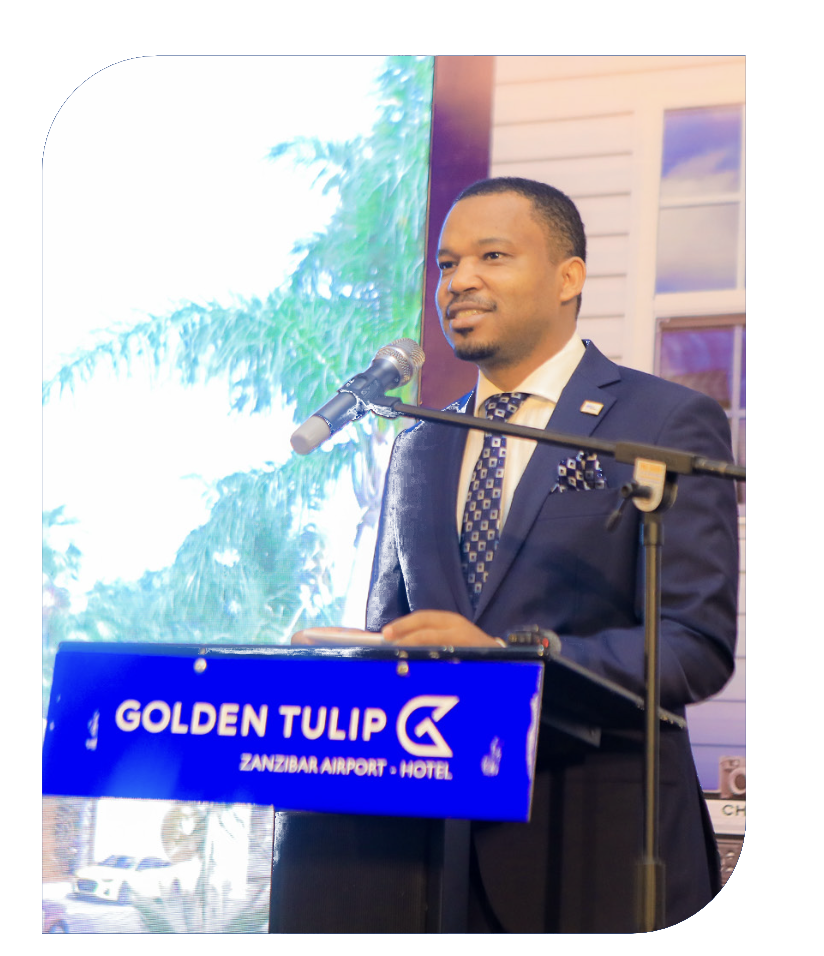
Mr. Masoud further highlighted REDA’s commitment to working closely with government institutions to ensure that policies, regulations, and legal frameworks are conducive to long-term, sustainable investment. “The formation of REDA will enable investors to work more effectively within the regulatory framework and help create a friendlier environment for real estate investments.”
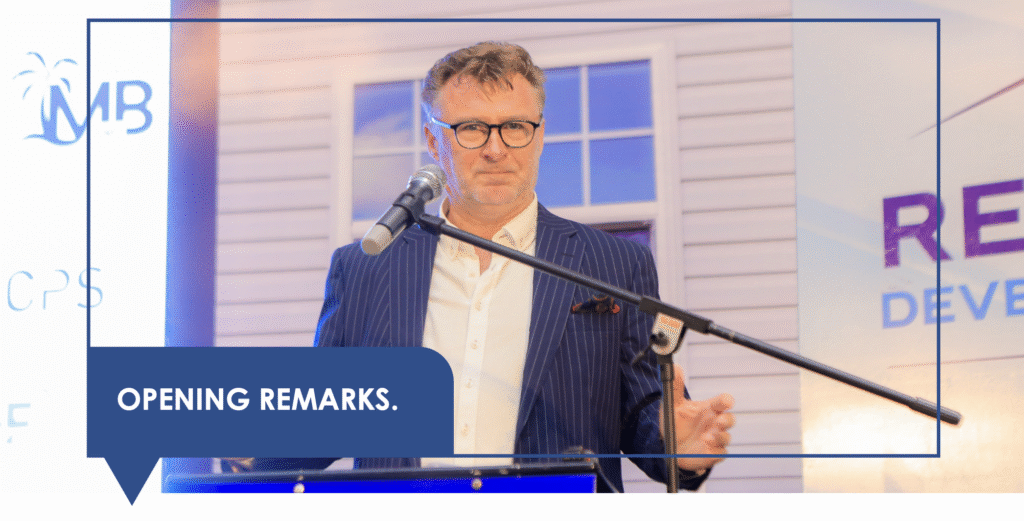
Marcin Filipczyk, Chairman of the Zanzibar Real Estate Developers Association (REDA), also delivered the opening remarks, and outlined the association’s vision and strategic priorities. He stated that REDA was established not only as a lobbying body but as a platform to foster collabora- tion, share best practices, and address common challenges within Zanzibar’s evolving real estate development sector.
He described real estate development as a “silent multiplier” of economic benefits, explaining that its impact extends far beyond the construc- tion phase. Real estate, he noted, drives job creation, supports small and medium-sized enterprises, stimulates demand for local materials and services, and contributes significantly to government revenue through taxes and fees. Moreover, it plays a vital role in the development of social infrastructure. He further emphasized that real estate also enhances Zanzibar’s international visibility, attracting global investors and fostering cultural exchange
“Any investment requires a proper and friendly environment,” said Marcin Filipczyk, emphasizing the need to cultivate a stable, transparent, and investor-oriented ecosystem. He stressed that the existing regulatory framework must undergo review and restructuring to reflect better the realities of Zanzibar’s growing real estate sector, placing particular emphasis on the urgent need to revise the Condominium Act.
Mr. Filipczyk also echoed widespread concerns within the real estate investor community regarding developingdeveloping laws and regulations without adequate consultation with stakeholders. He cautioned that the exclusion of industry professionals from policy formulation undermines trust and leads to frameworks that are disconnected from on-the-ground realities. “We are missing partners we can sit down with to solve these problems,” he remarked. “We want to work with government—not against it—but we need a seat at the table.”
Reaffirming REDA’s commitment to constructive dialogue and cross-sector collaboration, he called on all stakeholders—particularly the ministries responsible for finance and environment—to coordinate their efforts in producing clear, investor-ready policies. Mr. Filipczyk emphasized that REDA stands ready to work hand in hand with the Government of Zanzibar to create an environment that supports responsible, sustainable, and inclusive real estate development.
Following his remarks, Mr. Filipczyk invited the Guest of Honour, Hon. Sharif A. Sharif, Minister of State in the President’s Office for Labour, Economy, and Investment, to deliver the keynote address.
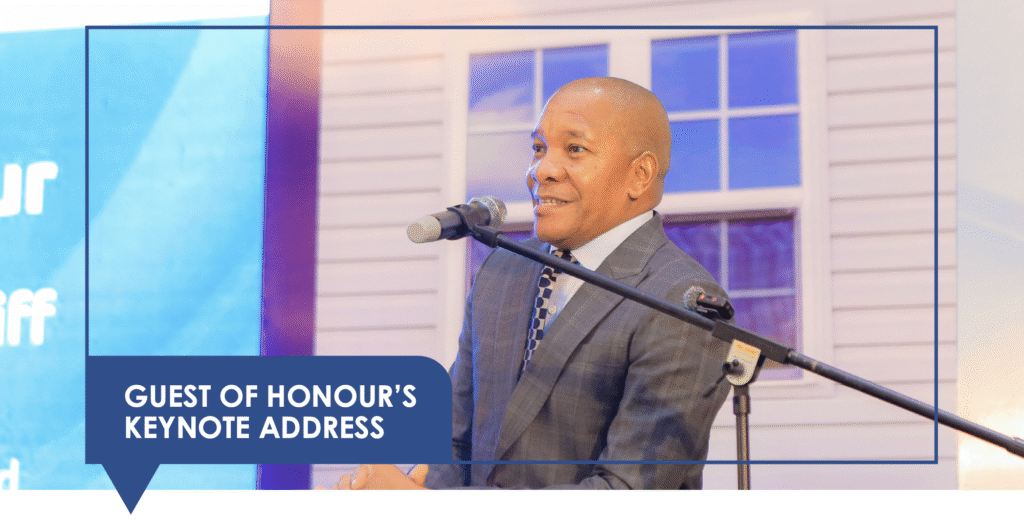
The Guest of Honour, Hon. Shariff A. Shariff, Minister in the President’s Office for Labour, Economic Affairs, and Investment, delivered a compelling keynote address during the official launch of the Zanzibar Real Estate Developers Association (REDA). Opening with the powerful statement when he said, “As they say, you cannot do anything for us without us,” reaffirmed the Government of Zanzibar’s commitment to inclusive policy development. He assured the audience that real estate stakeholders would be actively involved in every stage of formulating the sector’s regula- tory framework.
Hon. Shariff emphasized that the launch of REDA marked a new beginning for real estate development in Zanzibar. He described the association not merely as an organization but as a strategic platform that unites developers, investors, regulators, and other critical stakeholders across the real estate ecosystem. REDA, he noted, will serve as a catalyst for professionalism, transparency, and constructive dialogue between the private sector and government. The Minister highlighted REDA’s potential to align development goals, streamline processes, and ensure that Zanzibar’s real estate sector remains competitive, sustainable, and consistent with best practices. He reiterated the government’s unwavering commitment to fostering private sector growth and creating an enabling environment for investment and innovation.
REDA’s formation, he said, is well aligned with Zanzibar’s national development agenda and long-term vision for socio-economic transformation. In his address, Hon. Shariff acknowledged the central role of real estate in national development. He noted that the sector contributes significant- ly to job creation, sustainable urban planning, and foreign direct investment. He emphasized that real estate is not merely about constructing buildings but about shaping the future of Zanzibar through the development of housing, commercial spaces, tourism infrastructure, and smart urban systems. Strengthening the sector, he said, will boost economic growth, improve service delivery, and raise the quality of life for the people of Zanzibar. The Minister further underscored the importance of collaboration between the government and the real estate industry. He pointed out that institutions such as ZIPA and the Ministry of Lands are actively refining the regulatory framework to enhance transparency, ease of doing business, and build investor confidence. He recognized that a well-regulated, efficient, and investor-friendly real estate environment has the potential to unlock significant economic value. In this regard, he expressed confidence in REDA’s ability to support developers in operating within a fair and effective regulatory system.
Hon. Shariff called upon REDA to work closely with public institutions to develop laws, regulations, and guidelines that benefit investors and the broader public. He stressed the need for proactive engagement, noting that government support would include capacity building, advocacy, and investment promotion initiatives. As he concluded, the Minister extended the government’s commitment to regular engagement with REDA, inviting the association to maintain open channels of communication with the Ministry and other relevant bodies. He affirmed that through structured collaboration and shared vision, Zanzibar’s real estate sector can flourish and become a key driver of economic prosperity. The Minister concluded by calling on all stakeholders to unite in building a vibrant, dynamic, and sustainable real estate industry in Zanzibar. He then officiated the formal launch of REDA, joined by the association’s board members, marking a historic moment in the evolution of the island’s investment landscape.

As part of the event program, sponsors were given the opportunity to share brief presentations highlighting their contributions to the real estate sector in Zanzibar and their ongoing commitment to its growth. The sponsors included PADDCO, Furaha Investment, Johari Developers, CPS Africa, Utulivu, Infinity Development, ComNet, Said Attorney and Associates, MB Zanzibar, Rahisi Solutions, and GF Trucks & Equipment. Each sponsor used their allocated time slot to introduce their organizations, showcase key projects, and express their support for the establishment of the Zanzibar Real Estate Developers Association (REDA). Their presentations reflected the diversity of actors within the sector—from developers and legal firms to infrastructure and equipment providers—demonstrating the broad ecosystem that supports real estate development on the islands. The partners also had an opportunity to showcase their products and services at the venue.

PANEL DISCUSSION OVERVIEW
The panel discussion explored critical issues shaping the future of real estate investment in Zanzibar. One of the central questions explored was:
What contributes to making Zanzibar more attractive as a real estate investment destination? Panelists considered the factors influencing investor interest and the elements that position Zanzibar as a compelling choice in the regional market.
Another key focus was on differentiation—what sets Zanzibar apart from other regions? The discussion highlighted the island’s unique attributes and competitive advantages in comparison to neighbouring markets, raising important questions about branding, the policy environment, and long-term growth potential.
KEY ISSUES EMERGING FROM THE DISCUSSION
The panel discussion highlighted a wide range of insights and perspectives on what makes Zanzibar an attractive yet complex environment for real estate investment. Key issues raised during the discussion include.
FACTORS ENHANCING ZANZIBAR’S INVESTMENT APPEAL
During the panel discussion, participants highlighted several key factors contributing to Zanzibar’s growing appeal as a real estate investment destination. Panelists underscored the island’s strategic geographic position along major trade and tourism routes, noting that this unique location enhances its connectivity to regional and global markets. Coupled with its unspoiled natural beauty, Zanzibar is increasingly being recognized as a prime location for both residential and commercial real estate development.
The discussion also pointed to Zanzibar’s post-COVID-19 resilience as a critical driver of investor confidence. Under the leadership of former President John Magufuli, Tanzania’s stance during the pandemic was perceived as steady and pragmatic, which helped project a sense of economic stability to potential investors. This sentiment argued was expressed to have played a key role in maintaining and even growing interest in the region’s real estate market during a time when many other destinations were experiencing decline.
Furthermore, panelists emphasized that Zanzibar’s real estate market remains significantly undervalued, offering high potential for capital appreciation. The island was described as an “emerging investment frontier”—one that presents rare and largely untapped opportunities for both early movers and long-term developers.
“Zanzibar has raw untapped potential that is hard to find in the real estate market.” A sentiment expressed by Max Maxwell, CEO of PADDCO, reflecting a broader consensus that Zanzibar combines economic promise with authentic character—making it an increasingly attractive choice for both investors and end-users seeking long-term value.
Beyond financial opportunity, the panelists acknowledged the intangible qualities that enhance Zanzibar’s appeal—its rich cultural heritage, spiritual environment, and the exceptional hospitality of its people. These characteristics were key to creating a strong emotional and lifestyle connection for property buyers and investors alike.
LOCAL MARKET DYNAMICS AND INVESTMENT STRATEGIES
“There is room in this economy for every level,” stated James C. Prevost, Regional Director at RE/MAX, highlighting the inclusive nature of Zanzibar’s real estate sector. According to Prevost, the market offers space for a diverse range of investors—from small-scale local developers to large institutional entities—making it a uniquely accessible and scalable investment environment.
The panel also acknowledged the mounting pressure faced by local developers, who are competing with well-funded international investors entering the Zanzibar market. This evolving landscape underscores the need for local stakeholders to adopt more robust and strategic approach- es. Panelists emphasized that in order to remain competitive, investors must leverage a comprehensive mix of legal, financial, and technological tools to strengthen their positioning and operations.
A recurring theme throughout the discussion was the importance of cultural intelligence and contextual awareness. Understanding the local culture, regulatory framework, and business environment was described as essential for sustainable, long-term success. Panelists urged investors to engage qualified professionals for legal and advisory services, discouraging the reliance on informal or unpaid advisory. Establishing partnerships with reputable local experts—especially lawyers and consultants—was seen as a critical step toward navigating the market effectively and avoiding common pitfalls.
CHALLENGES AND BARRIERS TO INVESTMENT
Despite its growing potential and appeal, Zanzibar’s real estate sector continues to face a number of significant challenges that could hinder rapid and sustained development. One of the critical challenges raised during the panel discussion was the state of basic social infrastruc- ture—particularly healthcare. Panelists emphasized the urgent need to address these foundational gaps to support the growth of the real estate market.
Another major concern was the lack of clarity and consistency in regulatory frameworks, which often discourages local and international investors. The existing manual land tenure system is outdated and inefficient, prompting calls for digital transformation to increase transparency and reduce risk. Additionally, the panel highlighted concerns about regulatory changes being implemented without adequate stakeholder engagement. Sudden shifts in policies or the introduction of new regulations—without consulting developers, investors, or legal experts—create uncertainty in the market by undermines investor confidence and therefore calls for clarity and consistency.
The formation of REDA was welcomed as a timely and necessary step toward addressing these issues and strengthening industry coordination and advocacy.
GOVERNMENT’S ROLE AND INVESTOR RELATIONS
investment environment. Panelists urged the government to take a more proactive approach in aligning its efforts with those of investors—particu- larly through the provision of attractive incentives, streamlined processes, and a clear, consistent regulatory framework. There was a strong call for inclusive access to government support mechanisms, emphasizing that while investors must benefit from enabling conditions, they also have a responsibility to fulfil their obligations, such as paying taxes and adhering to regulatory requirements.
In this context, Max Maxwell, CEO of PADDCO, stressed the importance of fairness and realism in public-private expectations, stating: “Just as we have to price our units as how Zanzibar is today, the taxes have to be as Zanzibar is today.” His remarks highlighted the need for tax policies and fees to reflect the current state of the market and economic environment rather than being based on speculative future growth. This balanced approach, panelists agreed, is essential for building investor confidence, promoting sustainable development, and ensuring mutual benefit between the government and the private sector.
PROPOSED REFORMS AND INNOVATIONS
In response to some of the challenges discussed, several forward-thinking reforms were proposed. Among them was introducing a government-mandated ESCROW account system to protect investor funds and eliminate risky practices where developers use buyers’ money for unrelated activities. There was also strong support for accelerating the digitization of land registration systems to streamline processes, increase transparency, and attract more confident investment. These innovations were seen as essential steps toward building a more efficient, secure, and investor-friendly real estate market in Zanzibar.

RECOMMENDATIONS
To build on the momentum generated by the launch of the Zanzibar Real Estate Developers Association (REDA), strategic interventions are needed to address the structural, regulatory, and institutional challenges identified during the event. The following recommendations aim to promote sustainable investment, improve sector coordination, and ensure that real estate development contributes meaningfully to Zanzibar’s broader socio-economic goals:
- Accelerate legal harmonization by reviewing and consolidating existing real estate and land laws to eliminate contradictions, close gaps, and ensure regulatory coherence.
- Prioritize revising the Condominium Act and other key regulations with inclusive stakeholder consultation.
- Institutionalize regular dialogue platforms between the government and the private sector to co-create policies and monitor implementation.
- Expedite the rollout of the Land Administration and Registration Information System (LARIS) to replace manual systems and increase transparency.
- Develop a centralized, publicly accessible digital portal managed by COLA to provide real-time laws, procedures, and land availability updates.
- Implement mandatory ESCROW account systems for real estate projects to protect buyers and ensure financial accountability.
- Launch professional development programs in partnership with universities and training institutions to address local skills gaps in real estate disciplines.
- Provide financial and technical support to local SMEs to enhance their participation and competitiveness in the real estate sector.
- Enforce sustainability requirements such as reforestation and eco-friendly building standards in all major development projects.
- Develop and enforce cultural preservation guidelines to ensure that new developments respect Zanzibar’s social and historical identity.
- Pilot blockchain-based land registry and property tokenization projects to enhance transparency and open access to new forms of investment.
- Promote the use of GIS, remote sensing, and urban data analytics to guide zoning, planning, and infrastructure development.
- Develop a strategic policy advocacy agenda for REDA to articulate reform priorities and guide government engagement.
- Establish a professional code of conduct and a certification framework for REDA members to uphold ethical and legal standards.
- Forge partnerships between REDA and sectors such as tourism, infrastructure, ICT, and finance to enable integrated and synergistic growth.